Water Leak from the Flat Above in Turkey: Your Legal Rights and the Steps to Take
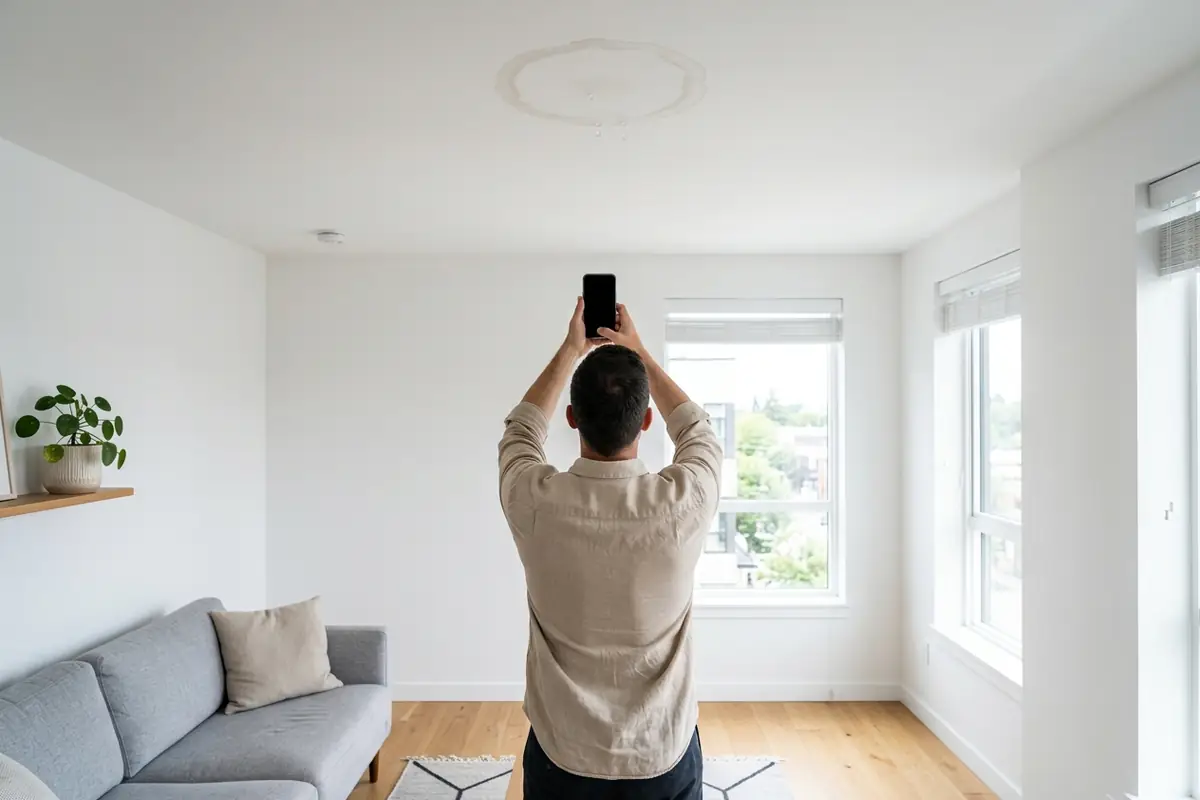
If water from the flat above, or from the building’s shared pipes, damages your flat in Turkey, the person responsible has to compensate you. There are four steps: have the damage recorded before it is repaired, apply to a mediator, bring a compensation claim, and enforce the judgment. Owners who live abroad can do all of this through a lawyer holding a power of attorney.
Who is liable?
It depends on where the water came from.
- The upstairs flat’s own installation or use (a burst flexible hose, an overflowing washing machine, a bathroom with failed waterproofing): the owner of that flat is liable for damage caused by defective construction or poor maintenance, whether or not they were personally at fault (Turkish Code of Obligations, Article 69; Civil Code, Article 730). If the damage was caused by a tenant’s own careless conduct, the tenant is liable as well (Code of Obligations, Article 49).
- Shared installations and common areas (the main drain stack, the roof, the façade): maintenance is the joint duty of all flat owners, and they are liable in proportion to their land shares (Condominium Law No. 634, Articles 19 and 20).
The source is often disputed. A court-appointed expert answers that question after inspecting the pipes, which is why the first step is to secure the evidence.
What should be done before repairs?
On the first day: have the water shut off, tell the upstairs owner and the building management, photograph and film the damage, and do not throw away damaged belongings.
The real safeguard is a court record of evidence (delil tespiti). Before any lawsuit is filed, the civil court of peace (sulh hukuk mahkemesi) where the property is located can be asked to record the damage (Code of Civil Procedure, Articles 400 and 401). The court sets an inspection date at short notice. The judge visits the flat with experts, who report on the source of the water, the extent of the damage and the cost of repair. That report is evidence in the later lawsuit.
If the walls are repainted and the flooring replaced before this is done, both the extent and the cause of the damage become hard to prove. Where repairs cannot wait, keep photographs, video, the contractor’s agreement and every invoice. A notice sent through a notary is not required, but it documents the date on which the other side was informed.
What can be claimed?
- Repair costs: ceiling and wall repairs, painting, flooring, doors, electrical work.
- The value or repair cost of damaged belongings: furniture, carpets, appliances.
- Lost rent, or the cost of staying elsewhere, for the period in which the flat could not be used.
- Any loss in the property’s value that remains after repair.
Each item has to be proved with documents. Where there is no invoice, the expert calculates the cost at market rates.
Mediation comes first
In disputes arising from condominium ownership and neighbour law, applying to a mediator is a precondition for filing a lawsuit (Law No. 6325 on Mediation in Civil Disputes, Article 18/B, in force since 1 September 2023). The application is made to the mediation office at the courthouse. The mediator does not decide; the parties find their own solution, and they can agree on things a court cannot order: a reduced amount in return for quick payment, payment in instalments, or the upstairs owner having the repairs done. Offers made in mediation cannot be used as evidence in a later lawsuit. If the parties settle, the settlement record can be enforced like a court judgment. If they do not, the final record is filed with the lawsuit. A lawyer with a power of attorney can attend the meetings for an owner who is abroad.
How does the lawsuit proceed?
Between flat owners in a building under condominium ownership, the claim is heard by the civil court of peace (Condominium Law, Supplementary Article 1). It must be filed within two years of learning of the damage and of the person liable, and in any case within ten years of the event (Code of Obligations, Article 72).
After the written pleadings the court holds a preliminary hearing, carries out a further inspection if needed and obtains an expert report. The evidence file from the first step is part of the case. If the full amount of the loss could not be known when the claim was filed, the claim can be increased once the expert report arrives (Code of Civil Procedure, Article 176 onwards). If a party objects to the report, a supplementary report is ordered. Because of inspections, reports and objections, it is normal for these cases to take more than a year.
The court awards compensation together with statutory interest running from the date of the event.
A claimant who is a foreign national may be required to deposit security for costs when filing, unless a treaty or reciprocity exempts them (Law No. 5718, Article 48).
If the case takes years: loss beyond interest
When a case lasts several years, statutory interest may not make up for the fall in the value of money over that time. The Code of Obligations gives a separate right for this: where the creditor has suffered a loss greater than the default interest, the debtor must compensate that loss too, unless the debtor proves they were not at fault (Article 122). In Turkish practice this is called munzam zarar.
If the additional loss can be determined in the pending case it is claimed there; otherwise it is claimed in a separate lawsuit. Court practice on how this loss must be proved has changed over time, and whether indicators such as inflation, deposit interest rates or exchange rates are enough on their own is assessed case by case. The basis and calculation of such a claim therefore have to be built on the facts of the file.
Enforcing the judgment
If the other side does not pay voluntarily, the judgment is enforced through the enforcement office (Enforcement and Bankruptcy Code, Article 32). A money judgment can be enforced before it becomes final; a debtor who has appealed can ask for enforcement to be postponed by depositing security that covers the debt (Article 36). The principal, interest, court costs and the attorney’s fee awarded in the judgment are collected together. The costs paid in the evidence file count as court costs.
If there is insurance
If the damaged flat has home insurance with water damage cover, the insurer pays within the policy limits. Compulsory earthquake insurance (DASK) does not cover water leaks. An insurer that has paid can recover that amount from the person who caused the damage, in its own name (Turkish Commercial Code, Article 1472). The owner cannot be paid twice for the same item, and claims only the part not covered by insurance from the person liable.
Acting from abroad
An owner who does not live in Turkey can have every step handled by a lawyer under a power of attorney. The power of attorney can be issued by a notary in Turkey or at a Turkish consulate; one issued by a foreign notary needs an apostille (or consular legalisation) and a sworn Turkish translation.
This article is general information and is not legal advice.
Frequently asked questions
Can I repair the damage before going to court?
You can, and the right to compensation is not lost, but proof becomes harder. Before repairs, the civil court of peace can be asked to record the damage through an on-site inspection and an expert report (Code of Civil Procedure, Articles 400-401). If repairs cannot wait, keep photographs, video and invoices.
Is mediation required before a water damage lawsuit in Turkey?
Yes, for disputes arising from condominium ownership and neighbour law. Applying to a mediator is a precondition for filing the lawsuit (Law No. 6325, Article 18/B). A request to record evidence does not require mediation.
How long do I have to claim compensation?
Two years from the date you learn of the damage and of the person liable, and in any case ten years from the event (Turkish Code of Obligations, Article 72).

Attorney Tuğçe Yılmaz
Founding attorney at her office in Gebze, registered with the Kocaeli Bar Association. Graduate of Afyon Kocatepe University Faculty of Law.